




A sofa that arrives in a compact box sounds convenient—and it is. Getting furniture through a narrow doorway or up an apartment staircase can be a challenge, and compressed packaging can make that process more manageable.
But easy delivery alone isn't enough for me to recommend a compressed sofa.
Before recommending one to a customer, I want to understand the foam, the support, the fabric, and whether its proportions suit the person who will use it. Here's what I would look at before buying a compressed sofa—and what would make me hesitate.
1. A "25D" or "40D" Label Doesn't Tell Me Enough
Foam density is often presented as a shortcut to quality. You might see "25D," "40D," or simply "high-density foam" in a product description.
If those numbers refer to kilograms per cubic meter, they describe density—25 kg/m³ is roughly 1.6 lb/ft³, and 40 kg/m³ about 2.5 lb/ft³. They don't tell you everything about how the foam feels or performs.
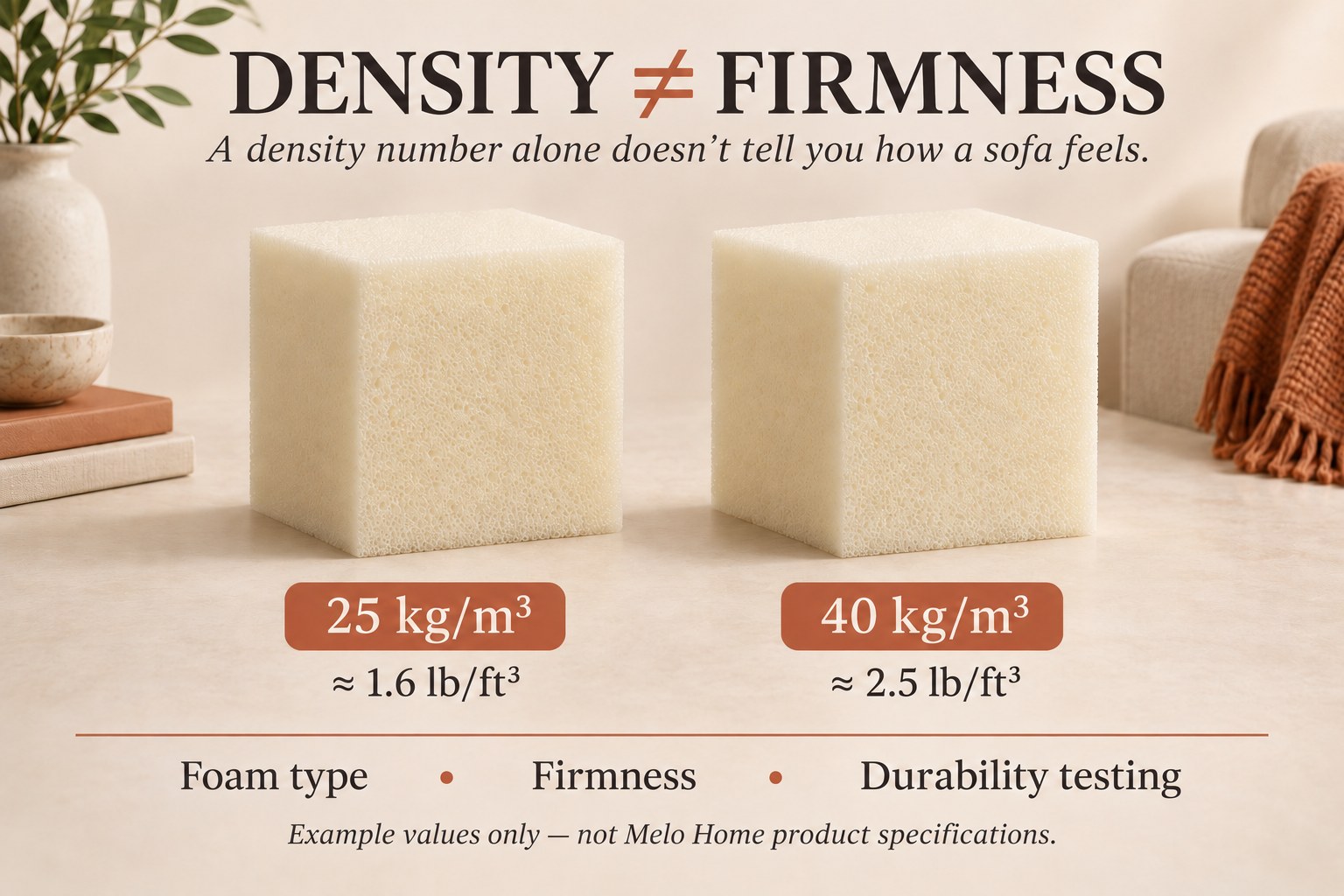
Density and firmness are different properties. A higher-density foam can feel soft, and a lower-density foam can feel firm. Durability also needs to be evaluated alongside other performance characteristics. The Polyurethane Foam Association explains these distinctions in its guide to foam performance.
I wouldn't dismiss a sofa simply because of the number on its label. But I wouldn't recommend it based on that label alone, either.
I would want to know what type of foam is used, which layer the specification describes, and what evidence supports the claims about comfort and durability.
A number is useful information. It needs context. For our own sofas, I point customers to what actually backs the comfort: CertiPUR-US® certified, high-resilience foam built for long-lasting support.
2. Softness Needs Support
A soft sofa can feel welcoming, but I also want to know what happens when someone settles into it.
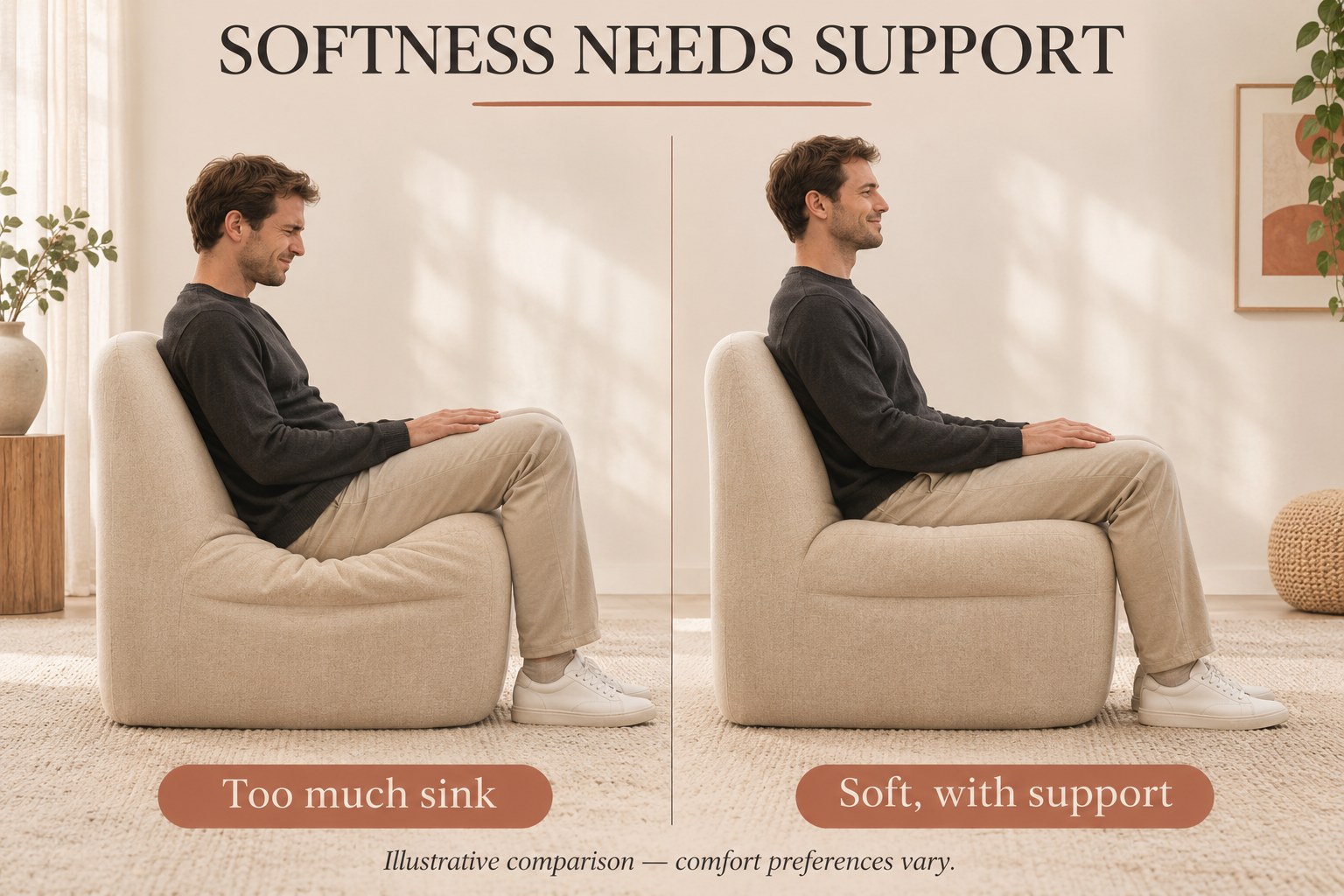
Does the seat provide support beneath the soft surface? Can you change positions comfortably? Does the foam spring back after you get up?
I would hesitate to recommend a sofa if the seating gives way too easily or makes it difficult to find a comfortable position.
People have different preferences. Some enjoy a soft, enveloping seat; others prefer a firmer feel. What matters is finding a balance of softness and support that suits the customer, rather than assuming the softest option is the best one.
Shopping online, you can't sit down first—so look for more than a softness claim. A clear description of the foam and real footage of the seat being pressed and settled into tell you far more. Every Melo Home product page has short videos filmed in our showroom, so you can see the shape, the texture and how the cushions spring back.
3. A Low Seat Isn't Right for Everyone
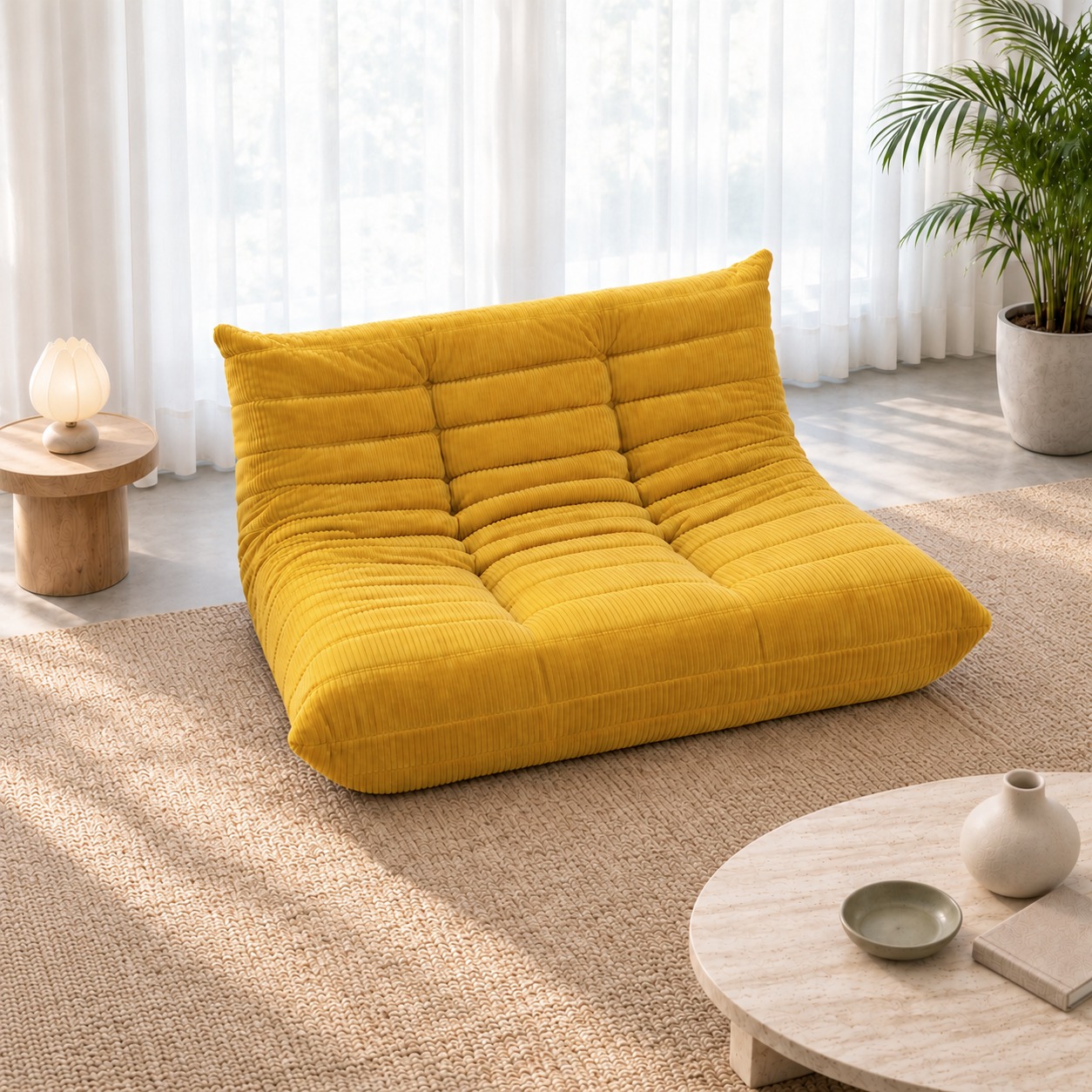
Low-profile sofas can create a relaxed, inviting space. They can work beautifully in a reading corner, a casual lounge, or a room designed around floor-level living—the kind of setting our Caterpillar collection is designed for.
It's a style I love—but it isn't for everyone, and that's fine.
If you prefer sitting upright with your feet on the floor, or you want to get up without much effort, pay close attention to seat height and depth.
Also consider how far the cushion compresses when you sit down. The listed seat height doesn't tell you exactly where your body will rest.
A deep seat may be comfortable for curling up, while someone who prefers an upright position may want more support behind their back.
Before choosing, think about how you actually sit—not just how the sofa looks in a styled room. If you prefer a more upright, traditional sofa shape, compare our modular Cloud and Cozeo sofas, and check the dimensions and size diagram on each product page.
4. Beautiful Photos Don't Tell You Enough About the Fabric
Texture and shade draw your attention first. But a fabric needs to work in your home, too.
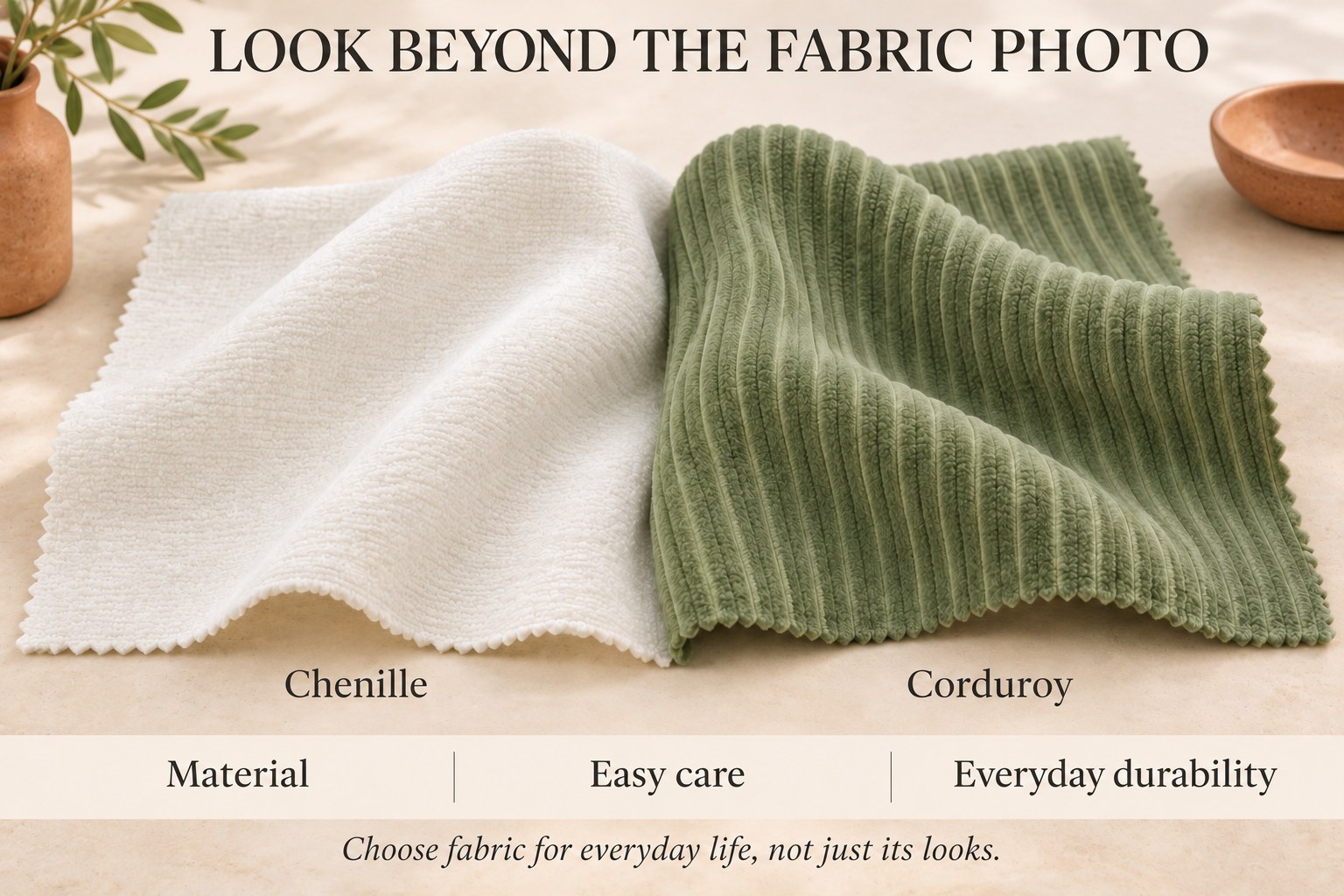
Before recommending a sofa, I want to know what the fabric is, how easy it is to care for, and how well it holds up to everyday life.
Words such as "premium" or "luxury" don't answer those questions.
Treated fabrics help, too. Ours are finished to repel water, oil and everyday stains, so spills are easier to deal with—just follow the care instructions, and act quickly rather than letting a spill sit.
Think about your routine. Will this be your everyday seat? Do you share the space with pets? Would the recommended cleaning method be practical for you?
A fabric should suit the way you live as well as the look you want.
5. Plan for Life After the Box
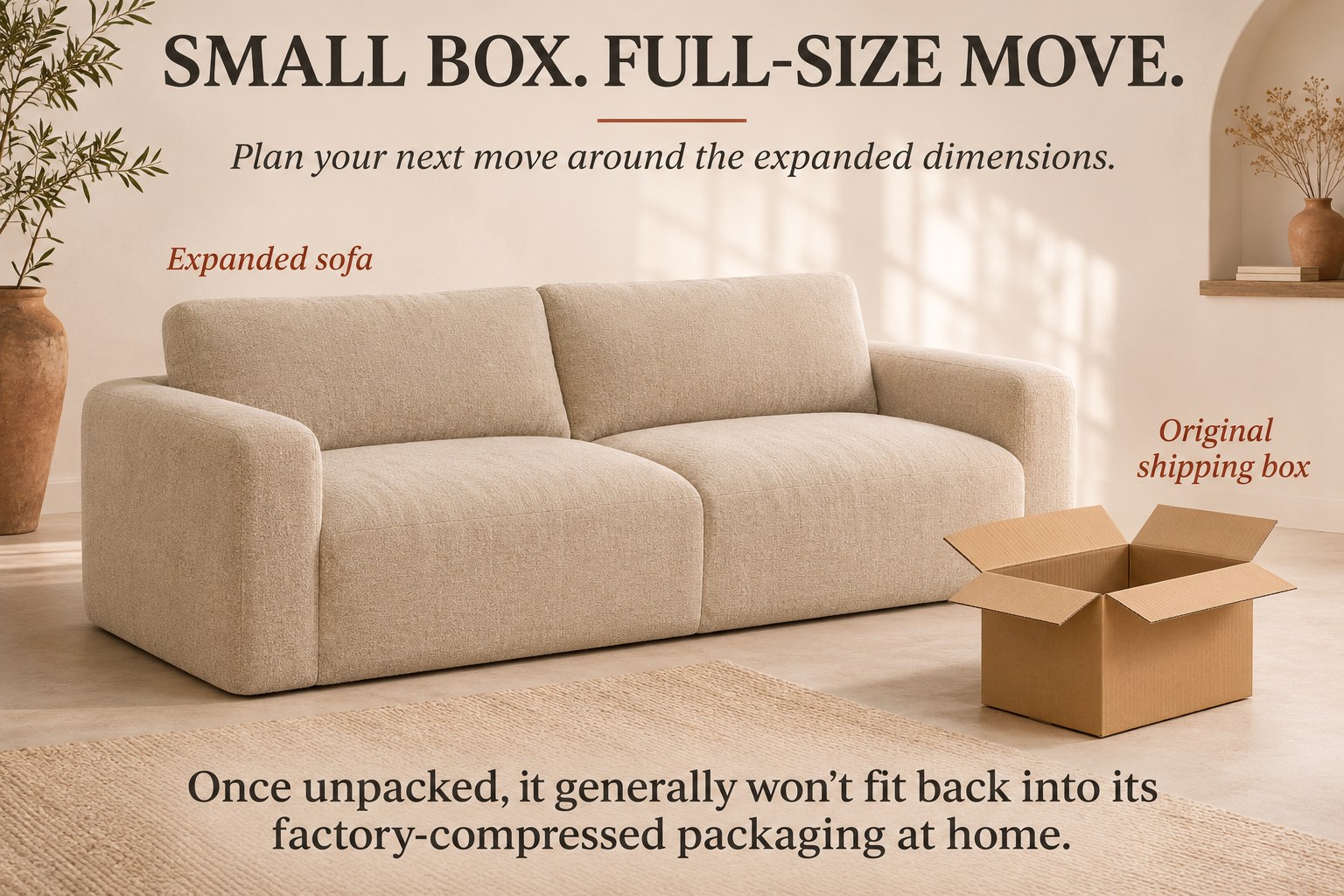
There's one practical detail I always explain before a customer buys: once unpacked, a compressed sofa expands to its full size and generally can't be squeezed back into its factory packaging at home. The box is how it arrives—not how you'll move it later.
The good news: all-foam compressed sofas are typically much lighter than similarly sized sofas built with wood or metal frames, and modular pieces can be carried one at a time. The exact weight still depends on the model and materials.
If you expect to move, check the expanded dimensions and weight of each piece. Plan around those measurements rather than the original shipping box.
What Would Make Me Recommend One?
I would recommend a compressed sofa when its materials are clearly described, its seating suits the customer, and its dimensions work for their home. That's the standard I hold our own sofas to:
Foam you can trust: CertiPUR-US® certified, high-resilience foam built for long-lasting support.
Fabrics tested for safety: OEKO-TEX® Standard 100, finished to repel water, oil and everyday stains.
A seat for how you relax: from the low, lounge-ready Caterpillar to the modular Cloud and Cozeo sofas.
Real dimensions, up front: every product page shows the dimensions and a size diagram, and every sofa is backed by a 3-year warranty.
Compact delivery is a useful benefit. The decision still comes down to the sofa you'll live with after the packaging is gone.
Explore the Melo Home collection—or contact us and I'll help you find the right fit.
FAQ
Does a higher foam density mean a firmer sofa?
Not necessarily. Density and firmness are separate properties: a higher-density foam can feel soft, and a lower-density foam can feel firm. Look at density together with how the seat is built and how it feels in use.
Is a low floor sofa comfortable?
It depends on how you sit. A low, deep seat suits lounging and curling up; if you prefer sitting upright or getting up easily, check the seat height and depth first.
Can I put a compressed sofa back in its box when I move?
Usually not. Once unpacked, a compressed sofa generally can't be re-compressed into its original packaging at home. The upside: all-foam pieces are light, and modular pieces can be carried one at a time—just plan around the expanded size of each piece.